



A glimpse into the History of Mawgan Porth
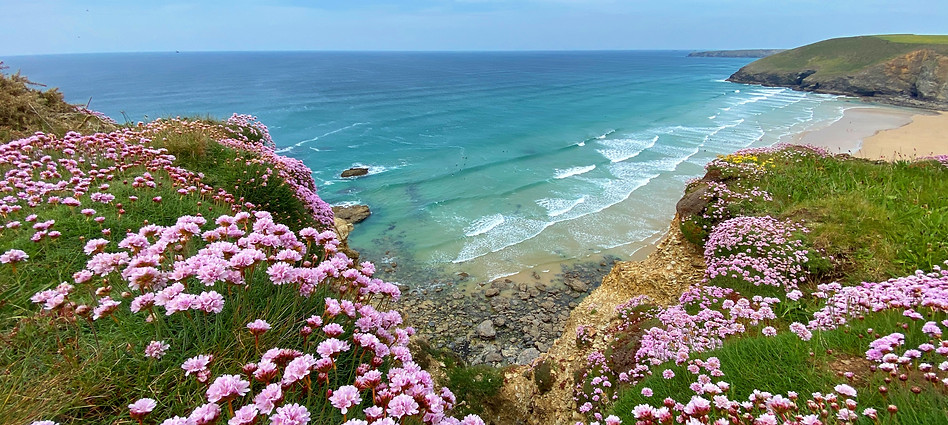
Archaeological evidence shows that Mawgan Porth has been occupied since at least the early medieval period, with one of the most significant nearby settlements dating back over 1,000 years and offering rare insight into post Roman life in Cornwall. Through the medieval and post medieval periods, it remained a small rural hamlet, with life centred around farming and coastal activity and very little development for centuries. By the 19th and early 20th centuries, it was still a quiet and remote coastal area made up of scattered farmsteads, before gradually beginning to attract visitors as Cornwall’s popularity for coastal holidays grew in the mid-20th century. Today, Mawgan Porth remains a small, low key village with a permanent population in the low hundreds, expanding seasonally as visitors come to enjoy its beach, landscape and relaxed atmosphere, while still retaining much of its unspoilt character.

Dark Age Settlement
Behind the beach at Mawgan Porth lies an ancient Dark Age settlement hidden beneath the dunes, revealing that this quiet Cornish cove was once a thriving community facing the Atlantic. The small early medieval village dates from about AD 850-1050, and consisted of three stone built courtyard house complexes with living areas, hearths, storage spaces and sections for keeping livestock, all arranged around sheltered open courtyards on a south facing slope above the beach. Archaeologists also uncovered a cemetery with stone lined graves, along with pottery, tools, knife blades, combs and food remains showing the inhabitants were farming, fishing and gathering shellfish, before the settlement was eventually abandoned, probably after drifting sand buried the area in the 11th century. You can still visit the site which is at the back of the Pitch and Putt course. Pick up a Historic England leaflet from the Art and Craft Studio beside the entrance to the course and take a walk through over 1,000 years of history.

Shipwrecks and Smuggling
Mawgan Porth sits on one of Cornwall's most exposed stretches of Atlantic coastline, and while it was never a major harbour, the surrounding waters have long been associated with shipwrecks and maritime danger. Before modern navigation, sailing vessels passing between Trevose Head and Newquay were vulnerable to sudden Atlantic gales, hidden reefs and powerful surf that could drive ships onto the rocks. Although few major wrecks are recorded directly within the bay itself, wreckage from nearby losses along this hazardous coast was often carried into Mawgan Porth by storms. For the local people, wrecks were part of coastal life. Like many communities along the North Cornwall coast, residents would have been quick to recover useful cargo washed ashore - timber, rope, barrels and provisions - which could be put to practical use in farming and fishing life. Alongside legitimate salvage, the area also sits within Cornwall's wider history of smuggling, when secluded coves and quiet beaches were used to land contraband such as spirits, tea and tobacco away from customs patrols. Mawgan Porth's tucked away valley and easy beach access would have made it a useful landing point in poor weather or darkness.

Edyvean's Canal
One of the area's most fascinating historical features is Edyvean's Canal, also known as the St Columb Canal, designed by engineer John Edyvean in the 1770's. The canal was built to transport sea sand, seaweed (which local farmers relied heavily on to fertilise the acidic Cornish soil) and stone inland to improve surrounding farmland. Although the ambitious project was never fully completed, sections of the canal briefly operated before being abandoned.
Unlike traditional canals with locks, Edyvean's Canal used innovative inclined planes to move goods through the valley. Today, traces of the canal can still be discovered around Mawgan Porth. At Merlin Farm, the scar line of the canal remains visible along the field and part of the original canal route follows along the present day farm lane - a quiet reminder of the area's remarkable agricultural and industrial heritage.

Aviation
Mawgan Porth and the surrounding area also played an important role during the Second World War. Nearby RAF St Mawgan was developed as a major wartime airfield for the Royal Air Force and the United States Army Air Forces. Opened during WWII, it supported transatlantic aircraft operations, maritime reconnaissance, and anti-submarine patrols over the Atlantic approaches - an area of vital strategic importance during the Battle of the Atlantic.
The nature of wartime aviation at the time meant long range operations over open sea, often in challenging weather conditions and with limited navigation technology by modern standards. Aircraft operating from Cornwall regularly undertook extended patrols over the Atlantic and surrounding coastal waters in support of convoy protection and coastal defence.
In the post war years, the airfield continued to expand and became one of Cornwall’s key RAF stations, later playing an important role in search and rescue operations and continuing military aviation activity. Today, its history remains an important part of the local heritage, reflecting the strategic significance of Cornwall’s north coast during a critical period in 20th century history.
Interesting Fact
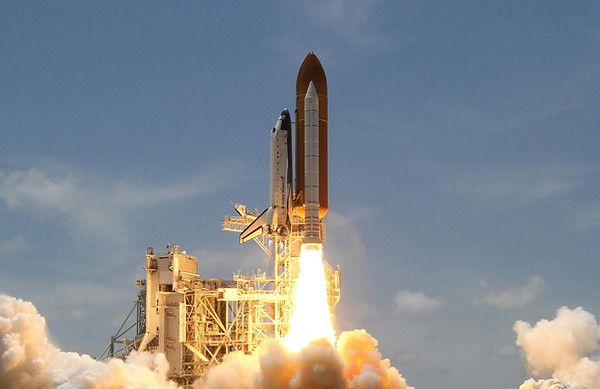
During the cold war era RAF St Mawgan was listed by NASA as a Transoceanic Abort Landing (TAL) site during the Space Shuttle programme. During Shuttle launches, NASA identified a small number of emergency landing airfields around the world. Pre-prepared emergency sites used only if a Shuttle had to abort its mission shortly after launch. RAF St Mawgan was selected because it had a very long runway (over 9,000 ft / 2,700 m), suitable for a high-speed unpowered landing. It was also located in the western UK, aligned with Atlantic launch trajectories, had military-grade navigation, radar and recovery facilities and was already a NATO and US-operational base with secure access. No Space Shuttle has ever attempted to land there and it is no longer an active TAL site since the Space Shuttle programme ended in 2011.